
Why Does My Shoulder Hurt When I Lift My Arm? Causes, Diagnosis and Treatment
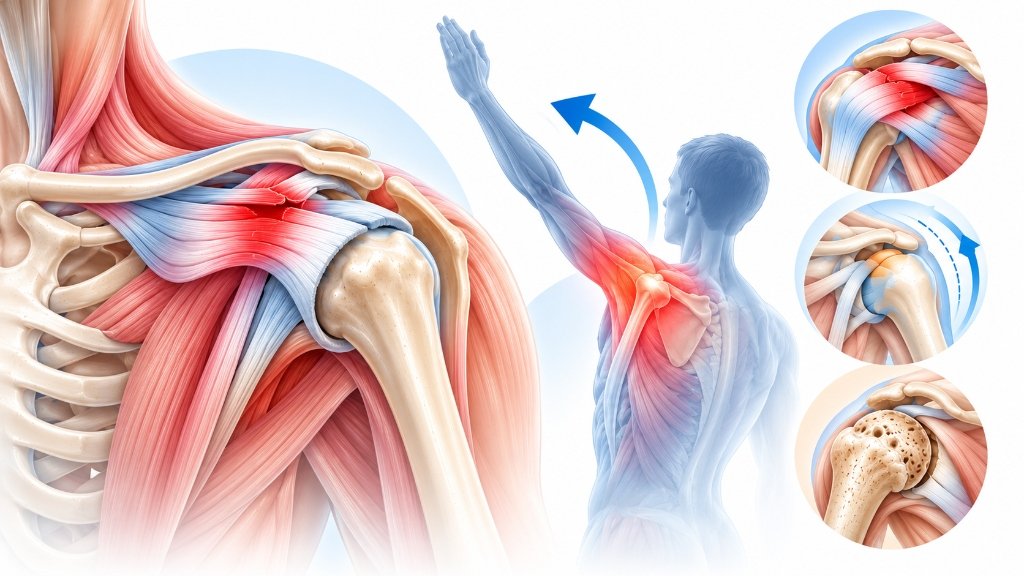
Key Takeaways
Why does your shoulder hurt when lifting your arm? Explore common causes, symptoms, diagnosis, treatment, and when to consult an orthopedic doctor in Kanpur. Medically reviewed and authored by Dr. Gaurav Bhargava (MBBS, MS Orthopaedics, Ex-SR Maulana Azad Medical College, New Delhi), Senior Consultant Orthopedic Surgeon at Joint Clinic (Swaroop Nagar) & BMTC Hospital (Kidwai Nagar), Kanpur.
Shoulder pain while lifting your arm can interfere with everyday activities such as dressing, reaching overhead, carrying groceries, or performing routine work. The discomfort may develop gradually, or it may begin suddenly following an injury or strenuous activity.
The shoulder is a complex joint that depends on coordinated movement between bones, muscles, tendons, ligaments, and surrounding tissues. Pain during arm elevation can arise from several different conditions, including rotator cuff problems, shoulder stiffness, arthritis, and injuries.
What causes shoulder pain when lifting the arm? The cause may depend on where you feel the pain, which movements aggravate it, whether your shoulder feels weak or stiff, and whether symptoms followed an injury. A clinical assessment is often necessary to distinguish between possible conditions.
This guide explains common causes of shoulder pain, how an orthopedic doctor evaluates it, and which treatment approaches may be considered.
What are the common causes of shoulder pain when lifting your arm?
Shoulder pain during arm elevation can result from tendon irritation, rotator cuff injury, frozen shoulder, arthritis, or other musculoskeletal conditions. These conditions may produce similar symptoms, so the painful movement alone cannot establish a diagnosis.
1. Can a rotator cuff injury cause shoulder pain when raising the arm?
Yes. Rotator cuff irritation, tendinopathy, or a tear may cause pain when lifting or rotating the arm.
The rotator cuff consists of four muscles and their tendons that help control shoulder movement and stabilize the upper arm bone. Problems affecting these tendons may cause pain during overhead activities, discomfort when lying on the affected shoulder, or weakness.
A rotator cuff problem does not necessarily mean that the tendon is torn. Irritation, degeneration, partial tears, and complete tears are distinct conditions that require appropriate evaluation. For progressive weakness or non-healing tears, specialized Rotator Cuff Repair can re-anchor the tendon and restore lifting power.
2. What is shoulder impingement, and can it cause pain during overhead movement?
Shoulder impingement is a term sometimes used to describe pain associated with tissues around the rotator cuff and bursa during certain shoulder movements.
You may experience discomfort while reaching overhead or raising your arm through a particular range. However, this symptom can also occur with other shoulder conditions.
An orthopedic assessment can help determine whether rotator cuff-related pain, bursitis, stiffness, or another problem may be responsible. When bone spurs cause chronic pinching, minimally invasive Shoulder Keyhole Surgery (Arthroscopy) can remove friction and restore smooth joint glide.
3. Can frozen shoulder make it difficult to lift my arm?
Yes. Frozen shoulder, also known as adhesive capsulitis, causes pain and progressive restriction of shoulder movement.
People may have difficulty raising their arm, rotating it outward, or reaching behind their back. The shoulder may feel increasingly stiff, and both active and passive movement can become restricted.
Frozen shoulder often develops gradually and may take months to improve. Management depends on the degree of stiffness, symptoms, and stage of the condition. Targeted Frozen Shoulder Treatment and hydrodilatation can break the stiffness cycle safely.
4. Can shoulder arthritis cause pain when lifting my arm?
Yes. Shoulder arthritis may cause pain, stiffness, and reduced movement as the joint's cartilage and other structures change.
Symptoms may become more noticeable during activity or after periods of rest. Some people also experience grinding or a feeling that the shoulder does not move smoothly.
An examination and, when appropriate, an X-ray can help determine whether arthritis is contributing to the symptoms.
5. Can tendon inflammation or overuse cause shoulder pain?
Yes. Repetitive overhead work, sports, or a sudden increase in exercise intensity can irritate shoulder tendons.
The discomfort may develop gradually and become more noticeable when you repeat the activity that aggravates it. Reducing the provoking activity and following an appropriate rehabilitation programme may help, depending on the underlying condition.
6. Can a shoulder injury cause sudden pain when lifting the arm?
Yes. A fall, collision, sudden pulling force, or heavy lifting injury can affect the shoulder's tendons, ligaments, bones, or joint.
A shoulder dislocation occurs when the upper arm bone moves out of its normal position in the joint. Sudden severe pain, visible deformity, or inability to move the arm following an injury requires prompt medical evaluation. For recurrent joint pop-outs, Shoulder Dislocation Care (Bankart Repair) stabilizes the socket and protects bone health.
Do not attempt to force a dislocated shoulder back into place yourself.
Why does my shoulder hurt when I lift my arm sideways?
Pain during sideways arm elevation can occur with rotator cuff-related problems, bursitis, shoulder stiffness, arthritis, or an injury.
The painful area and movement pattern can provide useful information, but they are not enough to confirm a diagnosis. Your doctor may assess shoulder movement, muscle strength, tenderness, and the history of your symptoms.
Avoid repeatedly testing a painful movement or forcing your arm through discomfort.
Why does my shoulder hurt when I reach behind my back?
Pain or restriction while reaching behind your back may be associated with shoulder stiffness, rotator cuff-related symptoms, arthritis, or other conditions affecting movement.
This movement requires the shoulder to rotate and extend. If the joint is stiff or surrounding tissues are irritated, reaching behind you may become uncomfortable.
If the restriction is persistent or progressively worsening, an orthopedic assessment can help identify the cause.
Why does my shoulder hurt at night or when I sleep on one side?
Shoulder pain may become more noticeable at night, particularly when you lie directly on the affected shoulder.
Pressure on sensitive tissues or certain shoulder positions may aggravate symptoms. Night pain can occur with several shoulder conditions, including rotator cuff-related problems and frozen shoulder.
If pain repeatedly interrupts your sleep, persists, or is accompanied by weakness or restricted movement, consider seeking medical advice.
Is shoulder pain when lifting the arm a sign of a torn tendon?
Not necessarily. Shoulder pain can occur with tendon irritation, stiffness, arthritis, bursitis, or a tear.
A tendon tear may be more likely when symptoms follow an injury or are accompanied by significant weakness, but symptoms alone cannot confirm it.
An orthopedic examination may help determine whether imaging, such as ultrasound or MRI, is appropriate.
When should I consult an orthopedic doctor for shoulder pain?
Consider an orthopedic consultation if:
- Shoulder pain persists or repeatedly returns.
- You have difficulty lifting your arm or performing everyday activities.
- Pain is affecting your sleep.
- You notice weakness or progressively reduced movement.
- Symptoms began after an injury and are not improving.
- Shoulder stiffness is becoming more severe.
When is shoulder pain an emergency?
Seek urgent medical care if you experience severe shoulder pain after an injury, a visibly deformed shoulder, or an inability to move your arm following trauma.
New numbness, a cold or pale hand, or marked weakness following an injury also warrants urgent evaluation.
Shoulder pain accompanied by chest pressure, breathlessness, sweating, or pain spreading to the jaw or arm may indicate a medical emergency rather than a shoulder problem. Seek emergency care immediately.
How is shoulder pain diagnosed by an orthopedic doctor?
An orthopedic assessment usually begins with a discussion of your symptoms, medical history, and any recent injury.
Your doctor may ask when the pain began, which movements aggravate it, whether you experience stiffness or weakness, and how the symptoms affect daily activities.
The examination may include observing shoulder movement, checking muscle strength, assessing tenderness, and evaluating the shoulder's response to specific movements.
Do I need an X-ray for shoulder pain?
Not everyone with shoulder pain needs an X-ray.
An X-ray may be useful when a doctor suspects a fracture, arthritis, changes in joint alignment, or another bone-related problem. The decision depends on your symptoms and examination findings.
Is an MRI necessary for shoulder pain when lifting the arm?
An MRI is not routinely required for every person with shoulder pain.
It may be considered when a tendon injury or another soft-tissue condition requires further evaluation, particularly if the findings could change treatment.
Your doctor can explain whether an X-ray, ultrasound, MRI, or no imaging is appropriate.
What is the best treatment for shoulder pain when lifting the arm?
There is no single treatment that is appropriate for every shoulder condition. Management depends on the diagnosis, severity of symptoms, general health, and impact on daily activities.
Can activity modification help shoulder pain?
Temporarily reducing activities that aggravate the shoulder may help. This does not necessarily mean keeping the arm completely still.
Your doctor or physiotherapist can advise which movements to modify and how to maintain comfortable mobility.
Can physiotherapy help shoulder pain?
Physiotherapy may help improve shoulder movement, strength, and function when the exercises are appropriate for the underlying condition.
A rehabilitation programme may include mobility exercises, strengthening, and gradual return to normal activities. Exercises should be selected according to your diagnosis and symptoms.
Avoid forcing painful movements, particularly after an injury or when significant weakness is present.
Are medicines or injections used to treat shoulder pain?
A healthcare professional may recommend medication or, in selected cases, an injection after considering the diagnosis, medical history, potential benefits, and risks.
Do not start, combine, or continue pain medicines without checking whether they are suitable for you.
Does shoulder pain always require surgery?
No. Surgery is not the first treatment for every shoulder problem.
Many conditions may improve with appropriate non-surgical care. Surgery may be considered for certain significant injuries, persistent symptoms despite suitable treatment, or conditions where an operation is likely to provide meaningful benefit.
The decision should follow an assessment and a discussion of expected outcomes, recovery, risks, and alternatives.
How long does shoulder pain take to improve?
The recovery period varies according to the cause, severity, and treatment.
Some mild episodes of irritation may improve over a shorter period, while conditions such as frozen shoulder or significant tendon injuries may require a longer course of treatment and rehabilitation.
If symptoms are not improving, are worsening, or are limiting your daily activities, seek medical advice rather than relying on a fixed recovery timeline.
How can I reduce the risk of shoulder pain?
You cannot prevent every shoulder condition, but practical measures may help reduce avoidable strain:
- Increase exercise intensity and overhead activity gradually.
- Use appropriate technique when lifting or performing repetitive tasks.
- Take breaks during prolonged overhead work.
- Avoid repeatedly pushing through worsening pain.
- Follow an individualized strengthening or rehabilitation programme when recommended.
If you already have shoulder pain, do not assume that generic shoulder exercises are appropriate for your condition.
Where can I consult an orthopedic doctor for shoulder pain in Kanpur?
If shoulder pain is affecting your movement or daily activities, consider an orthopedic assessment to understand the possible cause and appropriate treatment options.
At Joint Clinic Kanpur, patients can consult Dr. Gaurav Bhargava for comprehensive clinical evaluation of shoulder pain, movement difficulties, and sports or joint injuries.
You can easily Book a Consultation Online or Contact Joint Clinic Kanpur directly to arrange an in-person clinical assessment.
This article provides general educational information and is not a substitute for an individual medical assessment.
Frequently Asked Questions
Q: What causes shoulder pain when lifting a heavy object?
Shoulder pain while lifting a heavy object may occur with tendon irritation, rotator cuff problems, muscle strain, arthritis, or an injury. The cause depends on the symptoms and examination findings.
Q: Why does my shoulder hurt when I raise my arm above my head?
Overhead pain may occur with rotator cuff-related problems, bursitis, shoulder stiffness, arthritis, or other conditions. A clinical examination can help distinguish between possible causes.
Q: Can shoulder pain be caused by a neck problem?
Yes. Certain neck conditions can cause pain that spreads into the shoulder or arm. Numbness, tingling, or symptoms extending down the arm may prompt your doctor to assess the neck and nerves as well as the shoulder.
Q: Should I keep moving my shoulder if it hurts?
Comfortable movement may be appropriate for some conditions, but painful or forced movement can aggravate certain injuries. Follow the guidance of your doctor or physiotherapist, especially after trauma or when significant weakness is present.
Q: Can shoulder pain go away on its own?
Some mild episodes of shoulder pain may improve with appropriate activity modification and time. Persistent, worsening, or function-limiting pain should be assessed to identify the underlying cause.
Q: Which doctor should I consult for shoulder pain in Kanpur?
An orthopedic doctor can evaluate shoulder joint pain, movement restriction, and musculoskeletal injuries. Consider an appointment if symptoms persist, worsen, or interfere with everyday activities.
Doctor's Clinical Note
"Shoulder pain while lifting the arm can arise from several different conditions, including rotator cuff problems, stiffness, arthritis, or an acute injury. Since symptoms frequently overlap, treatment should always be guided by an appropriate clinical examination rather than self-diagnosis. Do not ignore progressive weakness, sudden loss of arm elevation, or persistent night pain that disturbs sleep."
— Dr. Gaurav Bhargava, Senior Consultant Joint Replacement & Orthopaedic Surgeon, Joint Clinic Kanpur.

Article clinically authored & reviewed by
Dr. Gaurav Bhargava
Consultant Joint Replacement & Orthopaedic Surgeon
Need Help with Your Joint Pain?
Consult Dr. Gaurav Bhargava in person at our Swaroop Nagar Clinic or BMTC Kidwai Nagar.