
What Is Sciatica, and When Should You See an Orthopedic Doctor?
Key Takeaways
Sciatica can cause pain that travels from the lower back into the buttock and leg. Learn about common causes, symptoms, diagnosis, treatment options, and when to consult an orthopedic doctor in Kanpur. Medically reviewed and authored by Dr. Gaurav Bhargava (MBBS, MS Orthopaedics, Ex-SR Maulana Azad Medical College, New Delhi), Senior Consultant Orthopedic Surgeon at Joint Clinic (Swaroop Nagar) & BMTC Hospital (Kidwai Nagar), Kanpur.
Pain that travels from the lower back into the buttock or leg can make walking, sitting, sleeping, and everyday activities difficult. One possible cause is sciatica. The term describes symptoms associated with irritation or compression of nerve roots that contribute to the sciatic nerve; it is not a diagnosis of one specific disease.
Sciatica may feel like shooting, burning, tingling, or electric-like pain along one leg. Some people also experience numbness or weakness. The cause, severity, and appropriate treatment vary, so persistent or concerning symptoms should be assessed by a healthcare professional.
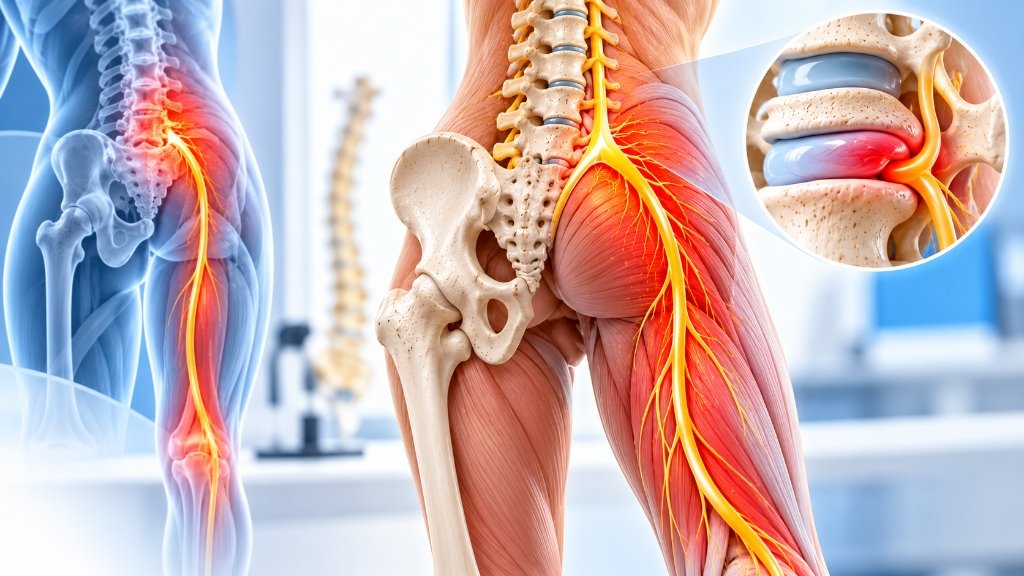
What is sciatica? Sciatica is pain or other nerve-related symptoms that travel along the pathway of the sciatic nerve, most often from the lower back through the buttock and down one leg. It commonly occurs when a nerve root in the lower spine becomes irritated or compressed.
This guide explains common causes and symptoms, how sciatica is assessed, and when to seek medical care.
What causes sciatica?
Sciatica can develop when structures in the lower spine irritate or compress a nerve root. The underlying cause cannot be determined from pain location alone.
Can a slipped or herniated disc cause sciatica?
Yes. A lumbar disc herniation can irritate or compress a nearby nerve root and cause pain that travels into the buttock or leg.
Spinal discs sit between the vertebrae and help absorb load. If disc material protrudes and affects a nerve root, symptoms may include radiating pain, tingling, numbness, or weakness. A disc finding on a scan does not automatically mean it is the cause of a person's symptoms; it needs to be interpreted alongside the clinical assessment. For progressive weakness or persistent nerve compression, specialized Slip Disc Treatment and medical decompression can safely relieve disc pressure.
Can spinal stenosis cause sciatic-type leg pain?
Yes. Lumbar spinal stenosis is a narrowing of spaces in the spine that may place pressure on nerve structures.
Some people notice leg pain, heaviness, or tingling when standing or walking for a period of time. Symptoms may ease when sitting or bending forward, although patterns differ between individuals. An examination helps determine whether spinal narrowing may be contributing.
Can age-related changes in the spine lead to sciatica?
Age-related changes, including disc degeneration or changes around the joints and ligaments, may contribute to narrowing or nerve irritation. However, these changes are also common in people who have no back or leg pain. A clinician considers symptoms and examination findings rather than relying on imaging alone.
Can muscle or other conditions mimic sciatica?
Yes. Pain in the buttock or leg can also arise from muscles, hip conditions, peripheral nerves, or other causes. Not all pain travelling down the leg is sciatica. If symptoms are persistent, unusual, or worsening, seek an assessment to clarify the cause.
What are the common symptoms of sciatica?
Sciatica often affects one side of the body. Symptoms may include:
- Pain travelling from the lower back or buttock into the thigh, calf, or foot.
- Sharp, burning, shooting, or electric-like pain.
- Tingling or pins-and-needles in part of the leg or foot.
- Numbness or altered sensation.
- Weakness in the affected leg or foot in some cases.
The pain may worsen with certain movements, prolonged sitting, coughing, or sneezing, but these features are not present in everyone. Symptoms can vary depending on which nerve root is affected.
Why does sciatica pain travel down the leg?
The sciatic nerve is formed from nerve roots in the lower spine and passes through the buttock into the leg. When a nerve root is irritated, the brain may perceive pain or altered sensation along the nerve's pathway.
The location of symptoms can provide clues, but it cannot reliably identify the exact cause or level of nerve involvement without a clinical assessment.
Is sciatica the same as lower back pain?
No. Lower back pain is discomfort centred in the back. Sciatica refers to nerve-related symptoms that travel from the lower back or buttock into the leg.
A person may have back pain and sciatica together, but either can occur without the other. Leg pain, numbness, or weakness may prompt a clinician to examine the spine and nervous system more closely.
When should I see an orthopedic doctor for sciatica?
Consider an orthopedic or spine assessment if:
- Pain travelling into your leg persists, recurs, or interferes with daily activities.
- You develop ongoing tingling or numbness.
- Walking, sitting, or sleeping becomes difficult because of symptoms.
- You notice new or increasing leg or foot weakness.
- Symptoms are not improving with appropriate initial care.
Which sciatica symptoms need urgent medical attention?
Seek emergency medical care if you develop any of the following:
- New difficulty passing urine, inability to urinate, or loss of bladder control.
- Loss of bowel control.
- Numbness around the groin, genitals, or inner thighs (saddle area).
- Severe or rapidly progressing weakness, particularly if it affects both legs.
These symptoms can indicate serious compression of nerves in the lower spine and require urgent assessment. Do not wait for a routine appointment.
Also seek prompt medical advice for back or leg pain accompanied by significant trauma, fever, or other symptoms that concern you.
How is sciatica diagnosed?
Diagnosis begins with a discussion of your symptoms and medical history. Your clinician may ask where the pain travels, when it began, what makes it better or worse, and whether you have numbness, weakness, or changes in bladder or bowel function.
A physical examination may include checking walking, lower-limb strength, sensation, reflexes, and movements that may reproduce symptoms. The purpose is to assess possible nerve involvement and consider other causes of leg pain.
Do I need an X-ray for sciatica?
Not everyone with sciatica needs an X-ray. X-rays show bones and alignment but do not directly show the details of spinal discs or nerves. A clinician may recommend one when the history or examination suggests a bone-related issue or another specific reason to investigate.
Is an MRI necessary to diagnose sciatica?
An MRI is not routinely required at the first assessment for every person with sciatica. It may be considered when symptoms are severe or persistent, when there are concerning neurological findings, or when the result could affect treatment decisions.
Urgent symptoms suggesting serious nerve compression require immediate medical assessment. Your doctor will determine the appropriate investigations based on your presentation.
What is the treatment for sciatica?
Treatment depends on the cause, symptom severity, and whether there is significant nerve dysfunction. Many people improve with non-surgical care, but the right plan should be individualized. At Joint Clinic Kanpur, targeted Sciatica Nerve Pain Relief protocols focus on rapid nerve soothing and targeted spine mobilization.
Can staying active help sciatica?
For many people, gentle movement and gradually returning to usual activities as tolerated may be preferable to prolonged bed rest. You may need to temporarily modify activities that clearly aggravate symptoms.
Avoid pushing through severe pain or attempting strenuous exercises without guidance, particularly if you have weakness, significant numbness, or symptoms following an injury.
Can physiotherapy help sciatica?
A physiotherapist may recommend an individualized programme to support mobility, strength, and functional recovery. The exercises and progression depend on the assessment; an exercise that helps one person may aggravate another person's symptoms.
If symptoms worsen, or new weakness or numbness develops, stop and seek clinical advice. You can also explore our structured Spine Recovery Guide for safe rehabilitation phases.
Are medicines used for sciatica?
A clinician may discuss medication for symptom relief after considering your medical history, other medicines, and possible risks. Different medicines have different benefits and limitations, and not all are suitable for every patient.
Do not self-prescribe, combine pain medicines, or use someone else's prescription. Ask a qualified healthcare professional what is appropriate for you.
Does sciatica require surgery?
No. Surgery is not necessary for every case of sciatica. It may be considered in selected situations, such as persistent disabling symptoms despite appropriate non-surgical treatment or significant nerve compression with concerning neurological findings.
The decision depends on the diagnosis, examination, imaging when indicated, and discussion of likely benefits, risks, alternatives, and recovery. New or worsening neurological symptoms need timely assessment rather than waiting to see whether routine treatment works.
How long does sciatica take to improve?
Recovery varies according to the underlying cause, symptom severity, and individual health. Some episodes improve over time, while others persist or recur and need further evaluation or treatment.
There is no single recovery timeline that applies to everyone. Seek medical advice if symptoms are worsening, not improving, or limiting your normal activities. New weakness or emergency warning signs should be assessed promptly.
Can I prevent sciatica from returning?
Not every cause of sciatica can be prevented. General measures that may support back health include:
- Build activity and exercise gradually, within your abilities.
- Use comfortable lifting techniques and avoid sudden increases in heavy lifting.
- Take movement breaks during long periods of sitting.
- Follow a tailored exercise or rehabilitation plan if recommended.
- Seek advice when symptoms recur or change.
These measures do not guarantee prevention, and persistent symptoms should not be managed by exercise alone without appropriate assessment.
Where can I consult an orthopedic doctor for sciatica in Kanpur?
If pain radiating from your lower back into your leg is affecting your movement or daily life, an orthopedic assessment can help evaluate possible causes and discuss suitable next steps.
At Joint Clinic Kanpur, you can consult Dr. Gaurav Bhargava for clinical evaluation of musculoskeletal symptoms and guidance on appropriate care.
You can Book a Consultation Online or Contact Joint Clinic Kanpur to arrange an appointment.
This article is for general educational purposes and does not replace an individual medical assessment. Seek urgent care for bladder or bowel changes, saddle-area numbness, or severe or rapidly progressing weakness.
Frequently Asked Questions
Q: What is the first sign of sciatica?
Sciatica may begin with pain in the lower back or buttock that travels into one leg. Some people also experience tingling, numbness, or weakness. Symptoms differ, and an assessment is needed to determine the cause.
Q: Can sciatica occur without lower back pain?
Yes. Some people mainly notice pain, tingling, or numbness in the buttock or leg, with little or no back pain.
Q: Is walking good for sciatica?
Gentle walking may be tolerable and helpful for some people, but activity should be adjusted to symptoms and individual advice. Do not force movement through severe pain or new weakness.
Q: Can a herniated disc heal without surgery?
Some disc-related symptoms improve with non-surgical care, but outcomes vary. A clinician can assess your symptoms and advise whether further investigation or specialist treatment is appropriate.
Q: Should I get an MRI for pain travelling down my leg?
An MRI is not automatically needed. It may be recommended when symptoms persist, examination findings raise concern, or imaging could change management. Your clinician can explain the reason for any scan.
Q: Which doctor should I consult for sciatica in Kanpur?
An orthopedic doctor or spine specialist can assess back-related leg pain, nerve symptoms, and possible treatment options. Seek urgent medical care for bladder or bowel changes, saddle numbness, or severe progressive weakness.
Doctor's Clinical Note
"Pain radiating from the lower back into the leg may be related to irritation of a spinal nerve, but several other conditions can produce similar symptoms. A careful clinical assessment helps identify the likely cause and determine whether further tests or treatment are needed. New bladder or bowel problems, numbness around the saddle area, or rapidly worsening weakness require urgent medical attention."
— Dr. Gaurav Bhargava, Consultant Joint Replacement & Orthopaedic Surgeon, Joint Clinic Kanpur.

Article clinically authored & reviewed by
Dr. Gaurav Bhargava
Consultant Joint Replacement & Orthopaedic Surgeon
Need Help with Your Joint Pain?
Consult Dr. Gaurav Bhargava in person at our Swaroop Nagar Clinic or BMTC Kidwai Nagar.
Clinical Care & Recovery
Related Articles
Why Does My Knee Hurt When Walking? Common Causes and When to Seek Help
Nov 05, 2026 • Knee & Joint Health
Why Does My Shoulder Hurt When I Lift My Arm? Causes, Diagnosis and Treatment
Oct 21, 2026 • Shoulder & Joint Health
Slip Disc vs. Muscle Spasm — How Doctors Tell the Difference
Dec 15, 2023 • Spine & Back Care